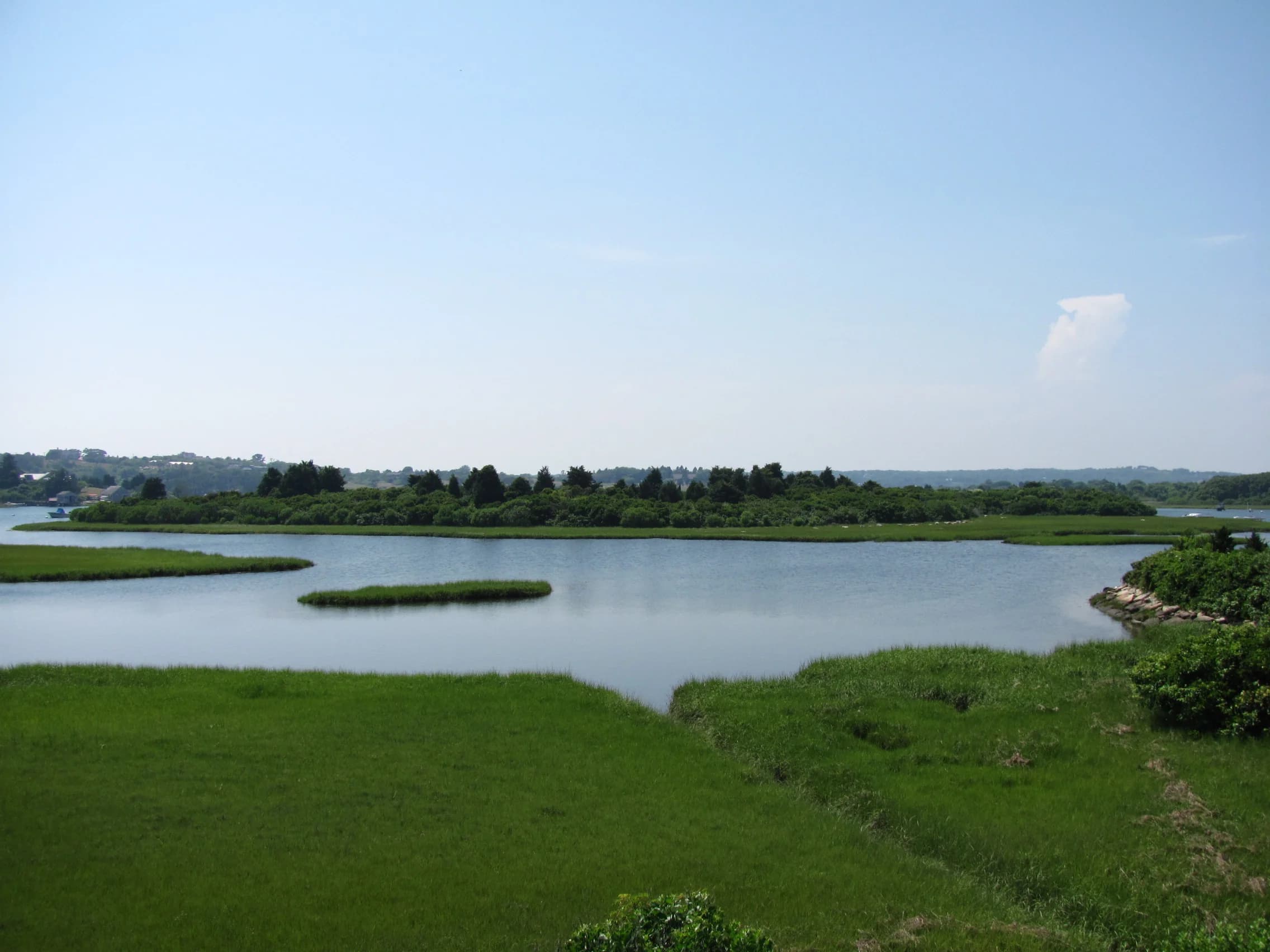
Water channels and grassy shoreline at Nashaquitsa Pond in Chilmark.
Photo: John Phelan, "Nashaquitsa Pond, Chilmark MA," CC BY-SA 3.0, via Wikimedia Commons. Cropped for display.SourceLicense

Why Vineyard Forests Matter

Martha’s Vineyard is home to a remarkable network of trees, microforests, and larger forests. Together, these landscapes support wildlife, groundwater, soil, air quality, climate resilience, recreation, community wellbeing, and the natural character of the Island.

Why Trees and Forests Matter

FVF is building an organization that views mature trees and forests as critical infrastructure assets delivering stormwater management, heat mitigation, carbon sequestration, habitat enhancement, flood attenuation, and community wellbeing benefits.

Living-Infrastructure Functions

Runoff and Infiltration

Forests can slow runoff, support infiltration, and build soil organic matter.

Groundwater is Martha’s Vineyard’s only source of drinking water, and the entire Island is designated as a sole-source aquifer. Forest cover, soils, runoff, and infiltration therefore deserve careful consideration in land-use decisions.

Carbon Storage

Mature trees retain carbon in wood, roots, and soil. Long-term USDA Forest Service research in a mature New England evergreen forest found that the forest stored nearly 3.5 tons of carbon dioxide per acre per year over a 25-year period. This regional research example is not an estimate of carbon storage specifically for Martha’s Vineyard.

Air Quality and Temperature

Tree canopy provides shade, can lower summer surface temperatures, and can filter airborne particulates and pollutants. A review of 308 studies cited by the U.S. EPA found that urban forests were, on average, about 3°F cooler than urban areas without green cover; this average is not a guaranteed temperature difference for every Martha’s Vineyard forest or property.

Soil Stability

Trees, roots, understory vegetation, and forest soils can slow runoff, reduce erosion, retain organic matter, and help maintain soil structure.

Habitat and Native Plant Communities

Long-established understory plants can depend on canopy-created soil and light conditions and on mycorrhizal networks. Removing canopy can disrupt those communities. Harvard Forest research shows that past land use can continue shaping soils, understory flora, and ecosystem function for decades or centuries.

Island Character, Community Wellbeing, and Property Value

The current site describes mature trees as contributors to property value, lower stormwater costs, lower energy use, community wellbeing, and the Vineyard’s landscape character. FVF’s perspective is that, beyond their measurable services, wooded landscapes are part of the Vineyard’s identity—the Island residents and visitors experience from the ferry onward.

What cumulative Island-wide effects are expected?

Consider the proposal alongside other tree and forest losses over time rather than evaluating every parcel or project in isolation.
Willy Mason performing on Martha’s Vineyard, surrounded by the Island forests at the heart of this work.Source

General Benefits and Site-Specific Evidence

General evidence about trees and forests can inform public decisions, but it cannot replace site-specific assessment.

The effect of removing or retaining trees depends on factors such as soils, slope, drainage, species, age, condition, surrounding land cover, project design, and maintenance.

FVF supports using both broad scientific understanding and project-specific evidence before making consequential decisions.